The National Safety Commission Alerts
Safety is No Accident. Visit the National Safety Commission - America's Safety Headquarters for driver safety information, auto recalls and teen safe driver tips.
Friday, October 08, 2010
Driving Survival: How to Survive a Vehicle Emergency
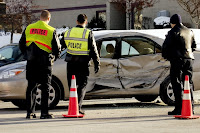
After a driver or passenger has been involved in a collision, disorientation, confusion, and possibly panic, are normal human reactions. In this series of articles on how to survive various emergency situations, we want to give the driver some good, common sense advice in the hope that, instead of panicking, a driver will recall the information and act correctly to get out of a dangerous situation. Even though the chances of any of these events happening to you are rare, knowing what to do in advance can prevent panic and help you cope with a bad situation.
Safety Tip Number One
Regardless of the crash situation you may find yourself in, your chances of survival increase by up to 55% if you are wearing your seatbelt. You are always safer, confined within the vehicle than you would be if you were ejected out the window or tossed around in the vehicle as it reacts to a major crash. Seat belts are always survival tip number one!
Safety Tip Number Two
Don't Panic! Panic is the enemy in any survival situation. Panic can lead to bad choices. Try to remain calm, take stock of your surroundings and the situation you are in. After surviving a car crash, the first thing you will want to do is exit the scene and remove you and your passengers away from a possible secondary collision situation. Panic will make that escape much more difficult.
Air Bags
When airbags deploy in a collision, the first thought many people have is that the car is on fire. While always possible, the chances of a vehicle catching fire, due to the collision, are rare. There are two reasons why people think that the car is on fire after the airbags deploy. The folds of an airbag are coated with talcum powder to keep the rubberized fabric from sticking to itself in long term storage and to ensure a smooth deployment. Once the airbag deploys, the interior of the car is filled with talcum powder. When the airbags deploy, a small explosive charge ignites two chemicals and that react to form the nitrogen that is used to fill the airbag. The smell of that chemical reaction is unfamiliar to most and that, combined with the talcum powder filling the car’s interior, is the reason why many people think the car is on fire. That isn’t the case. If the car is truly on fire, the smoke will most likely be dark and oily.

Airbags are terrific lifesaving devices but remember, they won’t deploy unless the sensor takes a direct hit. Also, because airbags are only effective if people wear their seat belts, the airbag may not work if the seat belt isn’t securely fastened.
After the airbags deploy, they will deflate one second later to make escaping from the car easier.
Window Punch
If, for any reason, you find yourself trapped inside a vehicle and you are unable to open the doors, or windows, you may find it very difficult to smash the windows from inside. The tempered glass used in car windows is very strong and difficult to break. There is a cheap spring loaded punch, sold in most auto parts stores for less than $10 that is designed to quickly shatter the window. Auto windows are designed to shatter into thousands of small, relatively smooth shards so the chances of being cut are minimal but you will want to shield your eyes before breaking the glass.
Keep the window punch handy and close to the driver’s position but make sure it is secure. Leaving it out on the dash will just allow it to fly around the car in a crash and you won’t be able to find it when you need it.
Get Away from the Vehicle
Once you have escaped the vehicle, you will want to place you and your passengers well off the roadway. The chances of another, secondary crash are very real so you need to stay as far away as you can until help arrives.
Next in the Series: How to Survive a Rollover
Labels: air bags, driver safety, emergency, emergency vehicle


Tuesday, July 06, 2010
Emergency Vehicles Right of Way and Laws
What is an Emergency Vehicle?
Emergency vehicles take many forms and, while most are obvious, not all are. The obvious ones belong to state and local police and fire departments but there are other types of first responders that aren’t commonly seen on the roadways.
Law enforcement – Most law enforcement agencies such as the state highway patrol, county sheriffs, and local police agencies are easy to spot. Other state or federal agencies that also respond to emergencies or conduct routine law enforcement can include:
Fire/Rescue – Fire and Rescue vehicles can include:
Ambulances – Ambulances can be from both government and private companies
Tow Trucks – This is one type of vehicle that most people fail to think of as an emergency vehicle but the work of these types of vehicles is critical in keeping the roadways clear.
What to do when an Emergency Vehicle approaches
Drivers should always be on the lookout for emergency vehicles. In modern cars with air conditioning and stereos, drivers may not hear an approaching emergency vehicle. Often, police agencies, not wanting to warn a prowler of their approach, will respond with lights only and no siren.
Following Emergency Vehicles
Most states have laws prohibiting any vehicle from following within 500 feet of an emergency vehicle. Some states also have laws prohibiting entering a city block where emergency vehicles are stopped with their lights flashing to prevent interference with the work being done.
Move Over Law
Between 1999 and 2009, more than one emergency worker per month was killed while aiding a motorist by the side of the road. As a result, 47 states have enacted some form of a "Move Over Law” . These laws require motorists who are approaching an emergency vehicle on the side of the road with its emergency lights flashing to move over into the opposite lane. If you are unable to move over you should slow down, in some cases to 20 mph below the posted speed limit. Studies show that most drivers are unaware of these laws but police agencies are enforcing them by issuing tickets to anyone who does not move over or slow down.
Treat any vehicle with flashing red, blue, or amber lights as an emergency vehicle and give them room to do their job.
Addtional articles on Emergency Vehicle Safety:
The Effect of Traffic Collisions On Emergency Personnel
Emergency vehicles take many forms and, while most are obvious, not all are. The obvious ones belong to state and local police and fire departments but there are other types of first responders that aren’t commonly seen on the roadways.
Law enforcement – Most law enforcement agencies such as the state highway patrol, county sheriffs, and local police agencies are easy to spot. Other state or federal agencies that also respond to emergencies or conduct routine law enforcement can include:
- Department of Transportation – Conducting routine safety inspections on commercial vehicles.
- Department of Environmental Protection – Responding to hazardous material spills or leaks.
- Department of Fish and Wildlife/Forestry – Providing law enforcement on state lands and parks
- Any unmarked vehicle equipped with sirens and flashing red or blue lights
Some states mark these vehicles as “Sworn Law Enforcement Officer” or “State Law Enforcement Officer”. As such, the law enforcement officers driving these vehicles have the power and jurisdiction to stop vehicles and issue traffic tickets.
Fire/Rescue – Fire and Rescue vehicles can include:
- Fire trucks
- Ambulances
- Command vehicles –such as the battalion chief’s car or large, on scene, command vehicles
Ambulances – Ambulances can be from both government and private companies
Tow Trucks – This is one type of vehicle that most people fail to think of as an emergency vehicle but the work of these types of vehicles is critical in keeping the roadways clear.
What to do when an Emergency Vehicle approaches
Drivers should always be on the lookout for emergency vehicles. In modern cars with air conditioning and stereos, drivers may not hear an approaching emergency vehicle. Often, police agencies, not wanting to warn a prowler of their approach, will respond with lights only and no siren.
- In your lane - If an emergency vehicle is approaching in your lane, pull over to the nearest edge of the roadway and clear an opening. Seconds count in an emergency situation and any delay could be deadly to the persons requiring aid.
- In the opposite lane – If an emergency vehicle is approaching in the opposite lane, be prepared to slow or stop if the vehicle needs to turn into your lane.
Following Emergency Vehicles
Most states have laws prohibiting any vehicle from following within 500 feet of an emergency vehicle. Some states also have laws prohibiting entering a city block where emergency vehicles are stopped with their lights flashing to prevent interference with the work being done.
Move Over Law
Between 1999 and 2009, more than one emergency worker per month was killed while aiding a motorist by the side of the road. As a result, 47 states have enacted some form of a "Move Over Law” . These laws require motorists who are approaching an emergency vehicle on the side of the road with its emergency lights flashing to move over into the opposite lane. If you are unable to move over you should slow down, in some cases to 20 mph below the posted speed limit. Studies show that most drivers are unaware of these laws but police agencies are enforcing them by issuing tickets to anyone who does not move over or slow down.
Treat any vehicle with flashing red, blue, or amber lights as an emergency vehicle and give them room to do their job.
Addtional articles on Emergency Vehicle Safety:
The Effect of Traffic Collisions On Emergency Personnel
Labels: emergency vehicle, move over america, move over law
Monday, June 14, 2010
Move Over America: Act on the Move Over Act

Many Florida motorists will sporadically notice "Move Over Act" advertisement on a toll booth sign, on a static roadside sign, on a sizeable billboard, on a “Rest Area” sign, on a gas bump sticker, or on a bus stop bench, just to name a few. But how many take the time and follow-up and go over the “Move Over”? And an estimated 71 percent of Americans have not heard of Move Over laws. Unfortunately, numerous drivers still do not act on the Move Over Act causing severe motor vehicle crashes with emergency vehicles parked along the roadway. This legislation act was passed in Florida in 2002 in order to protect our law enforcement officers and emergency responder employees from deaths & injuries caused by distracted and reckless motorists. According to the Florida Highway Patrol, during a five-year period from 1996-2000: 1,793 motorists crashed into law enforcement vehicles that were parked on the side of the road causing 5 deaths and 419 injuries. Emergency vehicles include a patrol car, a fire rescue truck, an ambulance, a tow truck, and a road ranger vehicle. Learn more about the Move Over Act at http://www.moveoveramerica.com/.
Here is a summary of the "Move Over Act", courtesy of the state Department of Highway Safety and Motor Vehicles:
- If you are driving on a road with multiple lanes going in the same direction, and approach an emergency vehicle parked along the roadway, you must vacate the lane closest to that vehicle as soon as it is safe to do so. In other words, carefully change lanes if you are able to do so. And do not forget your turn signals!
- If you are unable to move over safely, or if you are on a road with only one lane in each direction, you must slow down to a speed 20 mph below the speed limit, unless a law-enforcement officer tells you otherwise. If the speed limit is 20 mph, you must slow down to 5 mph. In other words, if you cannot change lanes, please slow down.
If you don’t move over, the penalty is about $149, depending on the county, and three points on your license. But more seriously, you could crash into an emergency vehicle or strike an emergency worker, causing serious injury or death. You could injure or kill another person or yourself. And at the end of the day, or beginning & middle for that matter, the Move Over Act is not a tough act to follow.
Now let’s move on to another traffic safety measure that drivers should follow in parallel of vehicles parked along the roadway. We as motorists can all relate with the grueling sensation of a driver attending to a vehicle malfunction or a flat tire on the shoulder of a road or highway. Times like these can be so frustrating that you might need a “shoulder” to cry on; especially under that scorching Florida sun. Therefore, if you are driving on a lane next to a parked vehicle on the side of the road or highway, please also follow similar instructions as in the “Move Over Act”; move over by changing lanes if possible or slow down. Too many motorists attending to vehicle malfunctions are killed by speeding vehicles crashing into them and killing them on the spot. So let’s please invoke Driver Empathy; that could be you changing that flat tire as vehicles are zooming at high speeds just a few feet away from you.
So please move over or slow down- and help protect those who help protect us and also those who drive with us.
Labels: emergency vehicle, florida driving laws, move over america, move over law
Thursday, June 03, 2010
Driver Safety: The Yellow Dot Program for First Responders
The Yellow Dot program is being implemented in counties across the country. The relatively simple idea has proven to be an effective way to relay information to the emergency response teams in the event of an accident. Participants in the Yellow Dot program place a yellow sticker on the bottom left corner of their vehicle’s rear window. This sticker lets emergency response crews know to check the vehicle’s glove compartment for important medical information regarding the vehicle’s driver.
It’s plain to see why the Yellow Dot program is beneficial in the unfortunate case of a serious, life threatening accident where the victim is unable to speak to the emergency workers. But, it can also be a vital tool in less serious accidents. Sometimes, people are in shock after an accident and they find it difficult to remember specific information. It would lower the risk of error in treatment is the emergency workers had immediate access to important medical information.
The first Yellow Dot program was initiated in Connecticut in 2002. To date, several counties across eight states have developed Yellow Dot programs of their own. Most of the programs have qualities that set them apart from other yellow dot programs; however the premise is the same.
For example, in Connecticut, the Yellow Dot decal indicates that emergency workers should look for an envelop containing a card with important medical information on it. In Colbert County, Alabama the yellow dot directs emergency workers o the glove compartment to look for a folder containing important medical information as well as a picture of the person the information pertains to. Obviously, including the picture will allow the emergency response team to quickly determine if they are looking at the individual the information pertains to.
In Alabama, the Yellow Dot program is available to drivers of all ages. However, a version of the program implemented in Kansas is geared toward seniors aged 55 and over. Again, the decal on the back window directs first responders to important medical and emergency contact information stored in the glove compartment.
Learn more about driver safety and defensive driving through the National Safety Commission Alerts by signing up for our newsfeed today.
It’s plain to see why the Yellow Dot program is beneficial in the unfortunate case of a serious, life threatening accident where the victim is unable to speak to the emergency workers. But, it can also be a vital tool in less serious accidents. Sometimes, people are in shock after an accident and they find it difficult to remember specific information. It would lower the risk of error in treatment is the emergency workers had immediate access to important medical information.
The first Yellow Dot program was initiated in Connecticut in 2002. To date, several counties across eight states have developed Yellow Dot programs of their own. Most of the programs have qualities that set them apart from other yellow dot programs; however the premise is the same.
For example, in Connecticut, the Yellow Dot decal indicates that emergency workers should look for an envelop containing a card with important medical information on it. In Colbert County, Alabama the yellow dot directs emergency workers o the glove compartment to look for a folder containing important medical information as well as a picture of the person the information pertains to. Obviously, including the picture will allow the emergency response team to quickly determine if they are looking at the individual the information pertains to.
In Alabama, the Yellow Dot program is available to drivers of all ages. However, a version of the program implemented in Kansas is geared toward seniors aged 55 and over. Again, the decal on the back window directs first responders to important medical and emergency contact information stored in the glove compartment.
Learn more about driver safety and defensive driving through the National Safety Commission Alerts by signing up for our newsfeed today.
Labels: driver education, driver safety, driver safety tips, emergency, emergency vehicle, first responders, traffic safety
Friday, May 01, 2009
The Effect of Traffic Collisions On Emergency Personnel
When tragedy strikes on the road, we expect emergency personnel to be on the spot within minutes and we depend on them to provide professional care and a calming influence to help us through the trauma. However, we often fail to think of the effect the trauma may have on them. Emergency personnel, including police, firefighters, EMTs, and tow truck operators face dangers outside what would normally be the obvious hazards of the job. Witnessing and providing emergency services at a traffic collision takes a toll on them in more ways than one. With each horrific crash, there are emotional tolls that lead to physical problems and with each crash, no matter how minor, there is a very real danger of serious injury or death.
The stresses of the job wear away at first responders little by little. A small amount of stress is common in our lives and can even, in certain instances, be beneficial. But when an individual is subjected to the types of stresses that first responders normally see, the stress can build up, leading to mental and physical problems for the first responder. Part of the stress is due to the fight-or-flight response. This natural response to any type of stress is a coping mechanism that physically prepares the body to meet an emergency. Blood flows to the large muscles and the body produces adrenaline to provide extra strength and endurance. As an infrequent occurrence, the fight-or-flight response can save our lives, but it can start to wear down our bodies when it happens on a regular basis.
To understand the full impact of the emotional toll on first responders, we first have to define the word accident in relation to car crashes. Accidents are occurrences beyond anyone's control. On the highway, there is very rarely such thing as an accident. Instead, there are only poor driving decisions on the part of one or more drivers that lead to a crash. The real tragedy of most traffic crashes is that they were so easily preventable.
When emergency personnel arrive at the scene of a traffic crash, they are often witnesses to horrific scenes that most of us will never see in a lifetime. Unfortunately for the emergency personnel, they witness these types of scenes on a regular basis. This begins to take an emotional toll on them, especially first responders who are parents, when they have to deal with children who have been orphaned, injured, or have died due to a senseless driver error.
Combined, the stress and emotional trauma can lead to chronic or long term stress. Over time, chronic stress can result in cognitive problems such as inability to focus, short attention span, memory problems, and difficulty in making decisions. Emotionally, it can lead to mood swings, irritability, depression, and anxiety. Chronic stress can also cause behavioral issues such as impulsiveness, pacing, insomnia, and non-productivity. If untreated, the chronic stress can lead to Post Traumatic Stress Disorder.
Finally, one of the biggest dangers that emergency personnel face is being struck by another driver while tending to the victims of a crash. This can happen when a driver who is speeding unexpectedly comes upon the scene of a crash and can't stop in time or by "rubberneckers" who are so focused on looking at the crash that they don't watch the road ahead. National Traffic Incident Management Coalition (NTIMC) studies show that, on average, at least two emergency responders are struck each day in the United States. Between 1995 and 2006 an average of one law enforcement officer was struck and killed each month by a passing vehicle. In the first three months of 2006, five tow truck operators were killed while working at the scene of a collision.

The incredible toll that these secondary crashes take on emergency personnel has led 40 states to pass "Move Over Laws." For example, Florida's Move Over Law requires motorists to move over into the opposite lane or, if they can’t move over, to slow down to 20 mph under the posted speed limit when passing any emergency vehicle with its emergency lights flashing. There is now a national campaign to encourage the remaining states to pass their own Move Over legislation and to increase awareness among motorists in states where they have been passed. A recent poll showed that while 90% of drivers believe the Move Over Laws are a good idea, only 39% of drivers are aware of their existence. You don't have to wait for your state to pass a Move Over Law to adopt this habit when you come upon an emergency vehicle.
The stresses of the job wear away at first responders little by little. A small amount of stress is common in our lives and can even, in certain instances, be beneficial. But when an individual is subjected to the types of stresses that first responders normally see, the stress can build up, leading to mental and physical problems for the first responder. Part of the stress is due to the fight-or-flight response. This natural response to any type of stress is a coping mechanism that physically prepares the body to meet an emergency. Blood flows to the large muscles and the body produces adrenaline to provide extra strength and endurance. As an infrequent occurrence, the fight-or-flight response can save our lives, but it can start to wear down our bodies when it happens on a regular basis.
To understand the full impact of the emotional toll on first responders, we first have to define the word accident in relation to car crashes. Accidents are occurrences beyond anyone's control. On the highway, there is very rarely such thing as an accident. Instead, there are only poor driving decisions on the part of one or more drivers that lead to a crash. The real tragedy of most traffic crashes is that they were so easily preventable.
When emergency personnel arrive at the scene of a traffic crash, they are often witnesses to horrific scenes that most of us will never see in a lifetime. Unfortunately for the emergency personnel, they witness these types of scenes on a regular basis. This begins to take an emotional toll on them, especially first responders who are parents, when they have to deal with children who have been orphaned, injured, or have died due to a senseless driver error.
Combined, the stress and emotional trauma can lead to chronic or long term stress. Over time, chronic stress can result in cognitive problems such as inability to focus, short attention span, memory problems, and difficulty in making decisions. Emotionally, it can lead to mood swings, irritability, depression, and anxiety. Chronic stress can also cause behavioral issues such as impulsiveness, pacing, insomnia, and non-productivity. If untreated, the chronic stress can lead to Post Traumatic Stress Disorder.
Finally, one of the biggest dangers that emergency personnel face is being struck by another driver while tending to the victims of a crash. This can happen when a driver who is speeding unexpectedly comes upon the scene of a crash and can't stop in time or by "rubberneckers" who are so focused on looking at the crash that they don't watch the road ahead. National Traffic Incident Management Coalition (NTIMC) studies show that, on average, at least two emergency responders are struck each day in the United States. Between 1995 and 2006 an average of one law enforcement officer was struck and killed each month by a passing vehicle. In the first three months of 2006, five tow truck operators were killed while working at the scene of a collision.
The incredible toll that these secondary crashes take on emergency personnel has led 40 states to pass "Move Over Laws." For example, Florida's Move Over Law requires motorists to move over into the opposite lane or, if they can’t move over, to slow down to 20 mph under the posted speed limit when passing any emergency vehicle with its emergency lights flashing. There is now a national campaign to encourage the remaining states to pass their own Move Over legislation and to increase awareness among motorists in states where they have been passed. A recent poll showed that while 90% of drivers believe the Move Over Laws are a good idea, only 39% of drivers are aware of their existence. You don't have to wait for your state to pass a Move Over Law to adopt this habit when you come upon an emergency vehicle.
Labels: emergency vehicle, move over law

 Find us on Facebook